

Dirhams and cash
The local currency is the Moroccan dirham (MAD). It is a closed currency — you get it inside the country, most easily from an ATM at the airport. ATM rates are fair; medina exchange offices are rarely worth the comparison.
Morocco is still a cash country. Credit cards work in riads, larger restaurants and supermarkets, but in the souk, at rural petrol stations and in cafés you pay cash. Plan on roughly 300–500 dirhams a day in small notes.
The tipping question
Tipping is part of everyday life in Morocco and part of many people's income. As a rule of thumb: round up a few dirhams in a café, about 10 per cent in restaurants, 10–20 dirhams for luggage porters at the riad.
For the driver and camp team on a multi-day tour, a shared tip at the end is customary if you were happy — the amount is genuinely your call. Nobody on our team will ever ask for it; that matters to us.
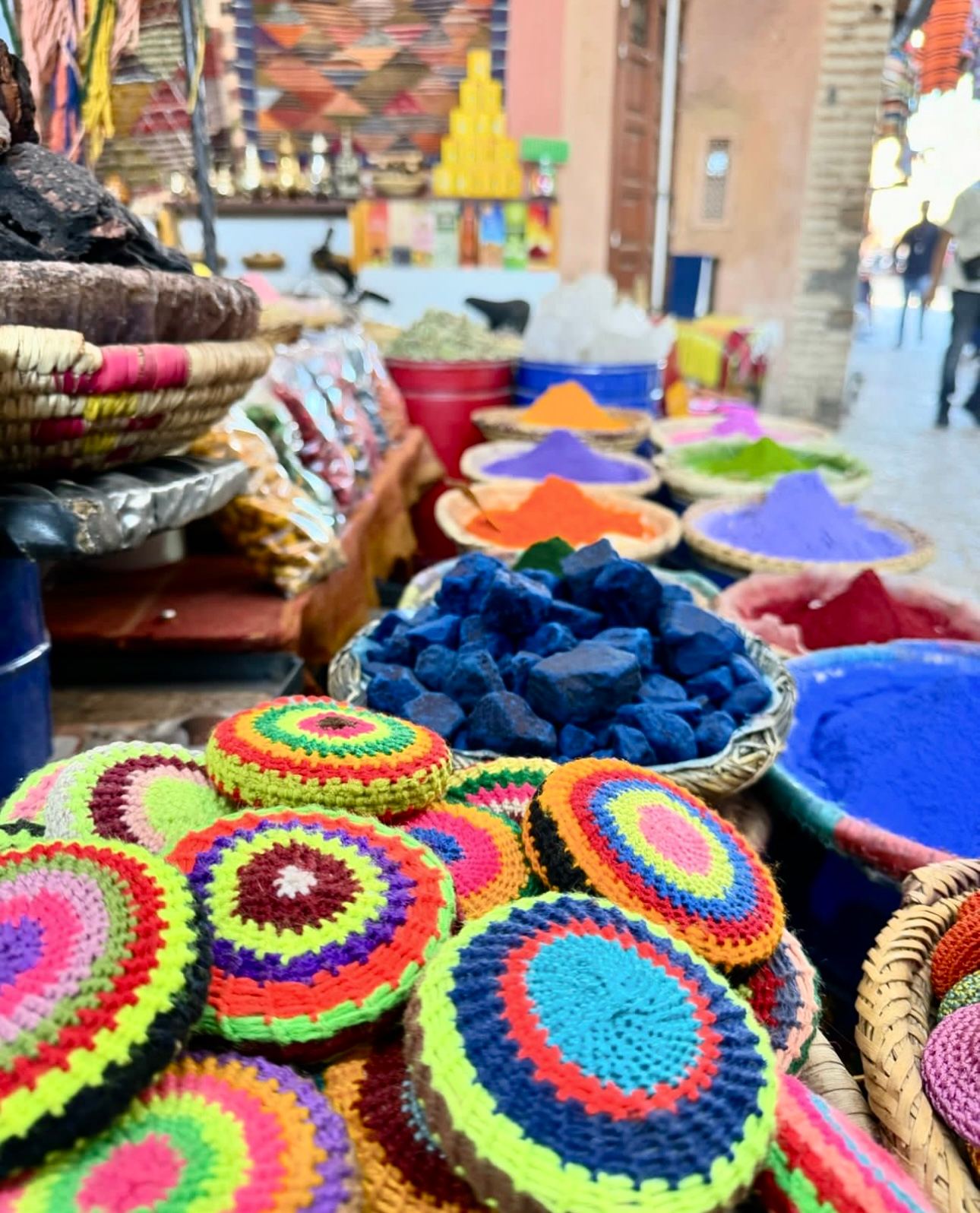
Haggling in the souk — a game with rules
Haggling is part of the experience, but it is a friendly game, not a battle. Ask the price, offer distinctly less, meet in the middle, and smile while you do it. The only rude version: negotiating at length and then walking away for no reason.
Fixed prices apply wherever prices are written — supermarkets, pharmacies, cafés and increasingly in craft cooperatives. Haggling there would be as out of place as at a German supermarket till.
